Who wouldn’t want to pay off their mortgage faster?
The big question is “how do I do it?”
Whether to pay off your mortgage faster, is an important personal financial decision.
But before one can answer “how do I do it,” you must first ask the questions of “can I do it” and “why should I do it.”
The can-I part reveals if one has the financial ability to put more money aside for bigger and quicker payments. The why-should-I part involves whether to use the additional money available, alternatively, for investing or consumption purposes since funds borrowed under mortgage probably have a lower interest rate than say credit card debt.
Paying off a mortgage faster also has tax implications on mortgage interest deduction.
If one has the financial means; is willing to forgo any investment opportunity; is prepared to postpone any would-be nice consumption; and has weighed on any tax savings, there are ways that one can consider to pay off a mortgage faster.
Understand the Mechanism of Paying Off a Mortgage
A mortgage is paid off through a mortgage amortization process over the life of the loan in which each payment is first applied to interest accrued during the current payment period and then to reducing the outstanding principle amount.
At the end of a normal payment schedule of a 30-year mortgage, the total amount of accumulated mortgage interests would have always surpassed the initial principle of the loan, if the mortgage interest rate used is above 5.304% (calculation omitted). Even if your rate is lower you can expect the total amount you pay to be close to double your mortgaged amount.
It’s quite a sobering thing to see the total amount of the loan being double what you are borrowing!
Therefore, paying off your mortgage faster essentially saves the borrower from having to pay such a monstrous amount of interest.
Anything can reduce the outstanding principle at any given point, either by making bigger payments from time to time or more frequent payments in addition to regularly scheduled. The goal is to accrue less interest in between payments, as well as reduce the total time during which interests are accrued.
Ways to Payoff Your Mortgage Faster
1 – Increase Your Monthly Payments
Increasing the amount you pay at originally scheduled payment points whenever you can is something very easy to implement with your lender.
Your extra mortgage payment amount would be applied towards further reducing your outstanding principle and thus a less amount of money would be accruing interest.
Make sure you lender knows that the extra payment will go towards reducing the principle!
What can happen in some cases, is the extra amount you pay will go towards your next payment due rather than the principle. This doesn’t help you pay down your principle faster.
Some lenders make it nice and easy and give you a spot on the bill to put in an amount to pay principle.
One interesting way to pay more towards your mortgage is with credit card rewards.
One lender I know of has their own card where 1% of your spending goes to payoff your principle. It’s a creative way to use credit card rewards.
2 – Increase the Payment Schedule
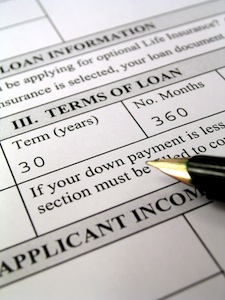
The normal monthly mortgage payments can be re-scheduled to be on a biweekly basis or even weekly if your financial situation allows. But how frequent the interest compounds should remain on the conventional monthly basis and not to be accelerated by your lender.
More frequent payments help lower the principle amount at their comparing time points.
3 – Change Your Loan to a Shorter Term
If you can really commit to making increased payments on a regular basis, shortening a 30-year mortgage to a 15-year loan would also save you about half of the interest and probably is the fastest way you could pay off your mortgage.
You could also pay extra in such a way that the payments you make would be what you would pay if you had a 15 year loan.
Use an online mortgage calculator to figure what your monthly mortgage would be if it were a 15 year rather than a 30 year and use that amount to pay monthly. You’ve basically just created a 15 year loan that gives you some cushion if some months you can’t make the higher payment, as you have the 30 year payment to fall back on.
4 – Refinance to a Lower Interest Rate Loan
With a lower interest rate, due to mortgage refinancing, the required monthly mortgage payments would be also lower and if you could maintain the same level of payments as before (with the higher rate), that would be equal to increasing monthly payments, and –BOOM!– pay off your mortgage faster.
We refinanced our mortgage not long ago and it’s saving us roughly $200 a month or $2,400 a year. That’s already more than a month in extra payments a year if we keep paying our original payment.
Final Word On Paying Off Your Mortgage Faster
Time is on the side of the banks with a mortgage.
What looks like a low rate could add up to hundreds of thousands over the course of thirty years in interest for the bank (and money out of your pocket). Reducing the amount you owe on your principle can save you a ton of money that you could use elsewhere to build wealth.
Paying down your mortgage faster is will save you far more over the life of your mortgage than most coupon cutting can achieve.
It’s not always the right move for everyone though. You can possibly make more investing the extra money. But for many people there’s a big psychological win in knocking down the mortgage early.



I would love to refinance but due to the fact that housing prices have gone down so much, much of the 20% down payment we put down is gone, so we’d probably be forced to pay PMI which would negate most if not all of the interest rate savings. So, the plan right now is that when one of the student loans is paid off by the end of the year (hopefully sooner) we will start bumping that over to the mortgage to increase our payments. We’re in year four of a thirty year loan so the interest knocked off during the life of the loan from the extra payments would be substantial enough to make it worth it in my eyes.
do this to pay house 100% FREE
MAKE UNLIMITED $31 OVER AND OVER ALL DAY EVERYDAY
MAKE $9 JUST FOR SIGNING UP
NO OFFERS
NO TRIALS
NO START UP FEES
NO MONTHLY FEES
NO MONEY OUT OF POCKET EVER!!!
GLOBAL OPPORTUNITY
COMMENT, ADD, OR INBOX ME
NO TIME FOR GAMES
SERIOUS PEOPLE ONLY!!!!!
#chola answers # sipag at tiyaga para umunlad #teacherchola
go here http://bit.ly/1YUufW5
We refinanced to a lower interest rate, and then changed our mortgage from a 30 year to a 15. Since our payment was dropping a bit already because of the lower interest rate, it really wasn’t that much more to drop it to a 15 year loan. Worked out great – just 7 more years to go. That sounds so much better than 22!!!
I really like number 2 because most likely it doesn’t require any major changes. Of course for those that are paid on a biweekly basis, the three month paycheck months will be somewhat smaller, but looking at how it affects the amortization table it definitely seems worth it to me.
With mortgage rates being about as low as they may ever be, now is definitely a great time to refinance as well.
May I add some more to this tips. Look for an extra income whether online or find some extra jobs in weekends or after work. Extra income helps you Increase Monthly Payments.
We pay the next month’s principle in between our scheduled mortgage payments. We’re hoping to keep up with that as time goes.
This is very interesting. Never thought of this before, but it makes total sence. I am going to do some adjusting to my budget and see if I can work this strategy into my finances.
Ellie, where did you learn this? I was told to look at the following months principal payment. send a separate payment in that exact amount and that would bypass the interest for that month. but i can not remember the details.
I like to walk by my mortgage bank and payoff bills at a time i.e. if I’ve got an extra $60 bucks I don’t need, I walk in and tell them to apply it to principle.
Nothing is set, but I think I end up paying off about 3 months worth of principal a year with my method.
Sam
That’s a pretty cool idea Sam, I don’t know if I would have the discipline to do this myself, but I also don’t have a mortgage (yet). I think the best part is once you figure out something that works for you, stick to it.
We’re 8 months into a 30yr mortgage, and 38 months ahead on principal payments. We printed a copy of the amortization schedule and affixed it to the refrigerator, not to be removed until it’s paid off. We mark the dates off as they pass, and mark out the balance owed to the nearest figure. It’s great being able to see the difference our additional principal payments are making, but it’s so ugly to look at we can’t wait to pay it off and get it off our fridge!
J Marsh, How much extra do you pay and how often?
I think most people are creatures of habit. Unless you are really disciplined, sometimes you will not pay extra unless you have too. Perhaps the best thing to do is go with a 15 year mortgage – it really can drop your principle much faster.
I would love to refi as well but it’s certainly not easy. Really without cutting your families monthly expenses…or without making someone else in your family get a job (or higher paying job) it’s nearly impossible. I think what we will actually begin to see in the near term are a bunch of reverse mortgages…esp from the baby boomers.
I agree with all these tactics, but they aren’t as easy to implement as they sound all the time. Sometimes you have to suffer a financial rough patch to make it through your mortgage.
With you saying “these tactics aren’t as easy to inpliment”-just remember-NEVER be late on your payment! Because I NEVER was, I had 3 CO’s WANTING me, therefore MY CO BEGGED me to STAY, DROPPED years on my mortgage, and I also DEMANDED KEEP THE SET rate! I WON! I ALSO as was said earlier in the article kept the payment THE SAME even when it goes down,put that on principle, and now I owe a MUCH lower amount for a MUCH shorter time.
What did you do to have them drop years off your mortgage?
As an hourly wage-slave I’ve added the net of my last few pay raises as well as any overtime or bonus money I receive to my mortgage payment.
I have been paying extra (Item #1) on my mortgage since I bought the house in 1996. I estimate it will shave about 9-10 years off of my mortgage. Once I am mortgage-free, I may go out on my own and leave the 9-5 lifestyle. At least, that is the dream for now.
Sounds like a great plan!
Sounds great. But what would you do on your own?
I should be dead free soon and am sick and tired of this full time life style.
Would love to do something different also….but what??
BB, look at the skills/hobbies/interests you have and see how you can apply them to a business model. Start out trying different things as a side business and see if you can grow into a full-time venture.
having the ability to go on-line now–looking at your mortgage statement/interest and make fastrack daily/monthly payments has completely changed my financial situation.
how i wish i could of done this 20 years ago
all the best everyone
Computer technology has made bill/pay so much easier. I’m horrible at mailing things out but paying online is a snap (though I actually pay my mortgage via check).
“Who wouldn’t want to pay off their mortgage faster?”
Possibly people who can make well over 4% on their money, or those who have a lot of money and want to have a mortgage payment that will probably buy only a pizza in 30 years.
Banks are taking a huge interest rate risk now on fixed-rate mortgages. 4% for 30-year money? That’s insane.
Well, even if I could make more than 4% I’d still like to pay off the mortgage faster. But yes, if you know you can definitely do better with the money…
There are plenty of people out there that still have mortgages over 4% though.
I guess it is a long-term risk for banks but they are getting incentives. But it’s not like a lot of people are getting their refi’s though. And the risk is better then the risk of bankruptcy for some people too.
I wish I would have thought of this sooner in my life. like 2 houses ago we are finally starting to on this house we are about 2-4 payments ahead
You know, there’s so much I wish I knew back in the day. We can’t know everything!
But you’re on it now. That’s great that you are up to 4 payments ahead!
Nice article and this is a very important topic. I try to pay off my mortgage well ahead of time because as you mention, every dollar you pay off today will save you from paying 2, 3 or more over the life of the loan. This is the wonder of compounding interest working against you rather than for you. To get the best possible rate, you should save up a good deposit as well.
Paying off your mortgage faster is a big plus, however, if you are planning to not stay at the same home for the whole 30 or 15 years, it’s not the best idea to make some extra payments…anyone agree?
What’s your reasoning Lior? It’s hard to say without hearing the whole picture. Paying off more gives you more principle in your home and reduces the interest you are paying. What would you do with the money otherwise? How long will you actually stay in the house? Maybe if you know you aren’t staying for a long time then refinancing to a shorter term or an adjustable rate would be better for you?
As you can see, there’s a lot that can go into the best option for you.
You will still get more money when you sell, no matter how soon you do sell. Always pay extra when you can
Hi glen. Thanks for the replay.
Here is my point:
If you pay extra money every month towards your principle you basically minimize the overall interest of your loan mainly at the end of your loan or the second term of the loan. If I sell my house let’s say 8 years after moving in, than I don’t really “enjoy” those years I was suppose to save on interest. Make sense? if I stay for many years as 20 or more, than I defiantly saved lots of interest. Even if I don’t invest my money somewhere else, It still better to have it on a saving account for a rainy day. Just as an info for you, my current balance is 304,000 on 4.375% interest for another 29 years…I would like to say it’s a decent rate the the bank give me, so what’s the rush give them their money back if I may not stay for so many years at the house and they won’t even get to enjoy their “juice” out of my money. English isn’t my first language so I apologize miss spelling or any other errors…
Lior, I have been doing many calculations on this very point. I completely agree with you. I would like to hear anyone who disagrees and has some math to prove it. From my calculations if you increase an 800 mortgage payment by 200 a month over 30 years on a 145000 loan you save close to 20,000 grand in interest if you stay in the home for 30 years. On the other hand, if you increase your payment by 200 and then sell your house in two years you effectively save very little interest. and by very little i mean less than 100 dollars. however, you would have paid down your principle by 200×24 (2400) dollars.
i meant to say, you save less than 200 dollars
i just found the question i’ve been dying to find. i would like to reduce my monthly payment which is $2200. i wanted to know if i put my $10,000. tax return to my mortgage will that lower the mortgage. i need to because the monthly payment is killing me.can barely enjoy a cup of coffee,much less a vacation. what do you all think? thanks guys
There are a number of mortgage calculators out there that let you play with the numbers to test out variables. Here’s one: http://www.mortgagecalculator.org/
Another thing to consider is refinancing. I don’t know the details of your loan or your financial situation, but a refinance could potentially save you money on your monthly mortgage.
If you have a tax RETURN of anything over $0 you have a different problem – stop loaning the government your hard earned money when you could be investing it, saving it, or as this article is all about, putting it toward your mortgage. http://freefrombroke.com/why-getting-a-large-tax-refund-is-bad/
I had my house paid off using a 15 year mortgage. Time flies and soon the house is paid for. If you could save 100,000. in interest that is way more that I could save other wise. Today’s economy has forced me to refinance the house for another 15 years to keep my small business open. All yo can do is keep plowing. Do the best you can, times will get better.
A 15 year mortgage is a great way to get a lower rate and pay off your mortgage faster. But I think a lot of people find it hard to keep up with the mortgage payments on a 15 year. If you can do it though, that has to be a great feeling to pay off a mortgage that quick.
And yeah, sometimes you do what you have to so you can stay afloat.
Recently I applied, but due in part to the downturn of ’08 and it’s affect on home prices, my home did not appraise for the amount needed, so, I have turned to an aggressive payment schedule for my current mortgage.
My question first is, is there a mortgage calculator (and it would need to be fairly complex) out there that:
1. begins with my current mortgage information (i.e. start date, interest, etc),
2. would take a variety of pre-payment options into consideration, like:
a. one additional monthly payment paid in calendar month 12 of each year, (I plan to achieve that by ALWAYS deducting 1/2 of my monthly mortgage payment from my bi-weekly paycheck, resulting in a 13th payment available in the 12th month)
b. two more additional payments made in the springtime (around March) from my annual bonus (some years, I may have more to add, others, things may be slimmer)
c. additional monies paid monthly, identified to my mortgage holder as additional principle payment.
3. and also could be used for tracking purposes. For those of us that are detailed about such a goal.
Because of my age (51), my quest is to pay the mortgage off prior to any retirement date, so, this calculator could become the basis of detailed retirement planning. I guess a detailed Excel spreadsheet would do this, however, I am not that savvy on Excel.
Any help would be appreciated.
Thanks in advance.
heres a calculator/covers what you asked for
http://www.ultimatecalculators.com/mortgage_calculator.html
Renting might be cheaper, but you won’t have a solid income forever. What happens when you retire or are too old to work and you are still renting? what happens then?
I’m probably 5 payments ahead on my mortgage….would It be better to just call the bank and have all the monies go directly to principal rather than be so far ahead on my payments?
Well, what is the purpose of being 5 payments ahead? If you have variable income and want to make sure you are paid up then I can see having the pre-payments. But if you want to lessen the interest over time and reduce your mortgage length then you might want the money going into principal.
Re-Finance might be great, but depends on what your balance is. because the closing cost might add another 3000-5000 to your balance, and it might affect your PMI.
There is no tricks on how to pay off your loan faster, the number 1 to 3 is all about increasing monthly payment, because everything you put in besides your monthly scheduled payments will towards the principle, that would decrease the interest against your principle. you would save 20,000-30,000 over 30 years if you pay off your mortgage within 5-7 years on a 4.5%-5.5% annual rate.
there are tools out there to calculate the interests you paid on a mortgage.
a great one I used when I applied my mortgage is below:
http://www.bankrate.com/calculators/mortgages/mortgage-calculator.aspx
FHA might have Pre-Payment penalty for the first 5 years, but not for conventional loans. Make sure you double-check with your banker to get the correct information.
I agree with Money Beagle, we have the same situation. I have made a bad decision with my mortgage. It’s really a case to case basis.
I’ve heard all of these things about something called the “Freedom Loan” that helps you pay off your mortgage faster, and people around here that listen to the adds absolutely are obsessed with it. Don’t people realize that there is no magic solution that makes you pay off your mortgage faster? There are only 4 and it’s pretty common sense. 🙂
I’d like to repay my mortgage faster, just not in a rush to start doing it this year. Maybe in 2-3 years.
I’d be remiss not to mention that I recently attended FinCon12 which had some of the top financial bloggers in the world in attendance. I met at least a 1/2 dozen people under the age of 35 who were ‘retired’. The interesting thing is that by purchasing a smaller house and aggressively paying off the mortgage, it gave them the financial freedom to use a smaller capital base and other passive streams of income to technically have made work optional. Either way, you must fall in love with the strategy of paying off your house. When I started in the financial services business, we were always told by managers that people could do better off in the stock market than they could on their house especially if interest rates were low. Forget about the financial analysis to determine which is better, and focus here on the powerful emotional feeling you have knowing that you owe NOBODY! When my mom retired (a 5th grade school teacher) that was my number one piece of advice to her-pay off your house and she did. Today, she still says it was the best decision she ever made.
I agree with Ted. I made the decision to buy less house than I could afford and went with a 10 year mortgage. I will own my house in 8 years. At that point my living expenses will be low enough to work part time or to work another 5 years and retire completely. The freedom those options present can not be measured on a spreadsheet
It’s surprising how much money that can be saved just by throwing a little bit of extra money toward a mortgage. If you can put that money toward retirement or something that will compound interest, it’s even better. When we were looking at buying a house last year, we were looking at doing 1, 2, and 3.
A 15 year mortgage is very doable for most assuming they purchase a home worth less than the maximum they are approved for by the banker.
The banker and realtor make more money off you when you buy a more expensive house.
Why allow the banker to tell you how much you can afford? I’m making the payments so I should decide how much I want to afford.
House A is more expensive and requires 30 year mortgage. House B is less expensive and is doable in a 15 year mortgage.
Most should choose house B.
Can you imagine no mortgage by age 40? Can you imagine the freedom to work, or not, part time or fulltime, when, where, etc?
Most people will never know such freedom.
Great points Amy. It’s far too tempting to listen to the bankers and realtors and shoot for the more expensive house because they say we can afford them. But by sticking to a more reasonable price point you can own your house outright sooner and pay less in interest too.
The problem are not the mortgages, it the fact that people live outside their means. Mortgages are one of the things people splurg on. As one person roughly stated, why even bother with a 30 year house note knowing that your budget might be tight? Go ahead and find a house that is smaller that you can readily afford on a 15 year mortgage. You have to remember also with a bigger house your utility, insurance, home upkeep, taxes, and things to fill up your house will be a lot more expensive! I think most people spend more time at work than they do at the house. So why pay so much for a house? Save the extra cash and used it to go on a vacation if you need a break. With interest rates so low, why pay extra on the house to pay it off quicker? That answer is so darn simple…..why would you want to be a slave to a bill for 30 years? Well you could put the extra cash into a higher interest investment? We all saw what happened when the markets crashed. A lot of people lost everything! At least if you own your house it you have some tangible and real. I bought my first house in 2009 and will have it paid off in 2015. The house is small nice house in a super neighborhood. For a second I thought about selling the house since I wanted to relocate to Florida. As I was putting up the for sale sign, a person interested in house asked if if there was a possibility if renting it. This idea never crossed my mind. I contacted my real estate agent and asked her, she said that is a wonderful idea since my house is in a very desirable neighborhood and finding a tenant would not be an issue. Why not have a person payoff the mortgage for you? She also mention to me that most wealthy people own real estate or have dabbled in real estate. To make a long story short absolutely pay of the mortage and get a house that you can readily afford. If you need a bigger house, then rent the first house and use the proceeds to pay the mortage of the second house. I have since plucked up 2 more houses and are renting them out. Will have all 3 houses paid off in 5 years. I do not make a ton of money from my day job but I have figured out a way to budget my money, live within my means, and lastly have other people pay for my houses! Wow….it’s really that simple.
Want to sell our home but money paid monthly goes mainly for interest. When selling and setting an asking price do you not figure in the interest paid and all the escrow? Just what it would be to do a pays off of the loan?
Refinanced from a traditional 15 yr mortgage @ 4.5% in year 4 to a 10 yr simple interest loan @ 3.375% for 150 dollars two years ago. I am already 10 months ahead, but was wondering how much benefit there would be in making daily online payments versus one monthly payment since it seems it is allowed. Original loan around 102K now @ roughly 74k
Has anyone ever tried using credit cards to pay down thier principal? Lets say I can
1) Borrow $6000 by paying $180 transaction fee (3%.)
2). Pay back 25/month, no interest for 1 year.
3) Pay off the balance at end of year before the credit card interest goes back to standard.
This would make a big dent to principal early in the loan. I end up paying $180 to save on the excess interest that $6000 would cost.
Of course I would have to be sure that I can pay off the credit card on time. This tactic only works when you can save a ton on intetest (like early in amortization schedule.)
Amazing! Its in fact amazing paragraph, I have got much clear idea about from
this post.
Thanks for finally writing about > Four Ways You Can Pay Off Your Home Mortgage Faster < Liked it!